
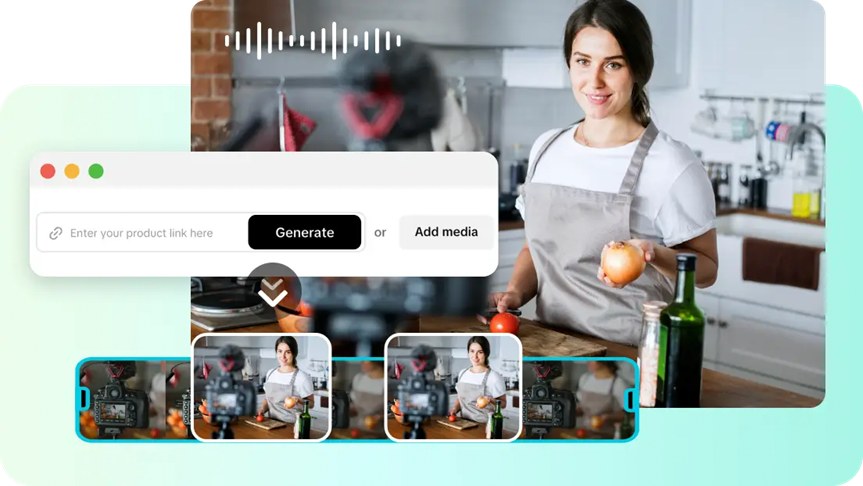
Realistic AI videos featuring avatars are shaping digital storytelling across industries today. Very important to make clarity, trust, and viewers’ engagement is the lip sync! Content creators are increasingly turning to automation to sync speech with visual expression. With advanced AI tools for seamless speech-to-avatar mapping, Pippit simplifies this process. It provides an easy and consistent way for creators to produce professional videos. Multilingual scaling is made easy by automated lip-sync, which ensures visual accuracy and emotional authenticity. These are used to create content in larger quantities for marketing and educational purposes.
Understanding AI Lip Synchronization in Character-Based Videos
Lip sync – speech to mouth movements of the avatar in real time. It makes digital characters more human and adds realism. When they don’t, it doesn’t build trust and distracts viewers from the message. The conventional method of editing involves manual frame editing and voice timing adjustments. AI-driven automatic phoneme detection and animation mapping saves time. Pippit integrates these systems to make it easier for creators to work with video. Modern platforms use neural networks to further improve the scene-to-scene synchronization. With real-time rendering, delays between the recorded voice and animated response are greatly reduced. Neural processing improves the accuracy of synchronizing dynamic facial movements. The closer the alignment, the more focused viewers will be on the message and not the artifacts.
How Pippit’s AI Character Engine Matches Speech and Mouth Movements
The first step of speech alignment is to recognize the phonemes and process the voice signal. The speech-to-mouth shape conversion is automatic. Words and expressions are synced by using timing algorithms. The AI character technology brings authenticity by syncing emotion with dialogue delivery. Pippit is a multilingual, multi-accent platform designed for content creation worldwide. Synchronization is compatible with various scenes and avatars. The mismatches between phonemes and mouth shapes are effectively reduced by advanced tracking. This increases the viewers’ engagement and enhances video realism.
How to Use the Pippit AI Character Generator for Accurate Lip Sync
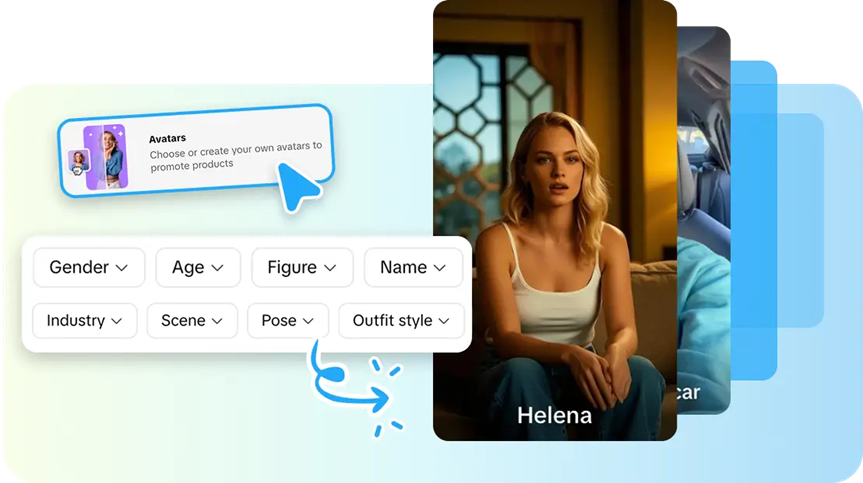
Creators log in to Pippit’s dashboard to make their video. Avatars can be selected, and the system is user-customizable to alter their appearance. Multilingual script editing for various audiences. The AI video generator ensures the script and the avatar’s dialogue are perfectly synced. Users can modify captions, pacing, and expressions before exporting the final output. Marketing, education, and social content production are easy with Pippit. The templates in Pippit can help creators save considerable time. Automation ensures uniformity on several video projects and formats.
Steps to sync speech perfectly with lip movement through an AI character engine
Step 1: Launch the avatar workspace and select a character
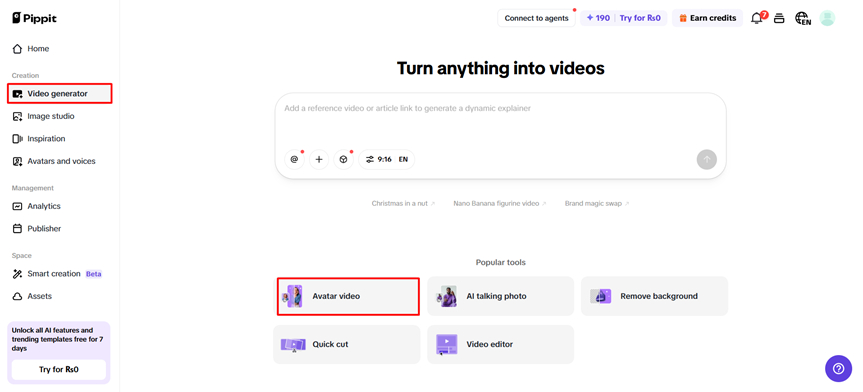
- Log in to Pippit and open the dashboard to start creating a lip-synced avatar video.
- Click on “Video generator” from the left-hand menu to enter the main creation workspace.
- In the Popular tools section, choose “Avatar video” to browse available AI characters.
- This feature helps align spoken narration with avatars to create engaging, realistic video content.
Step 2: Match dialogue with the avatar
1. After entering the avatar section, browse the characters displayed in the “Recommended avatars” area under “Choose avatar”.
2. Filter options by gender, age, industry, name, scene, pose, outfit style, or figure to find the right character.
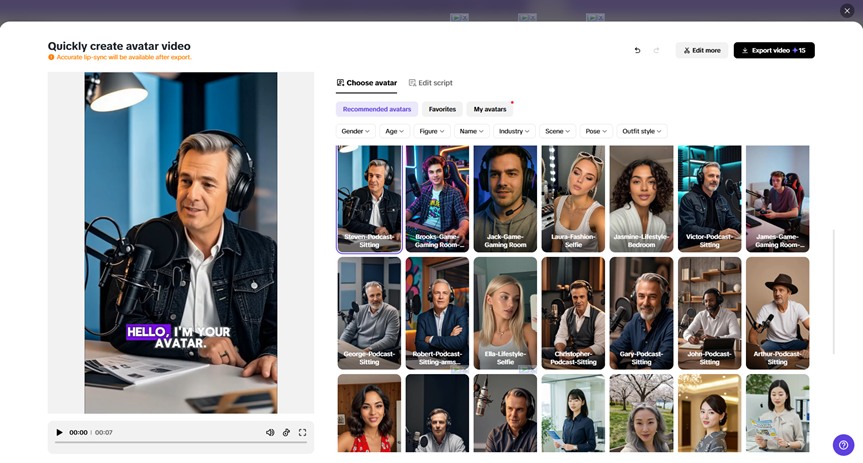
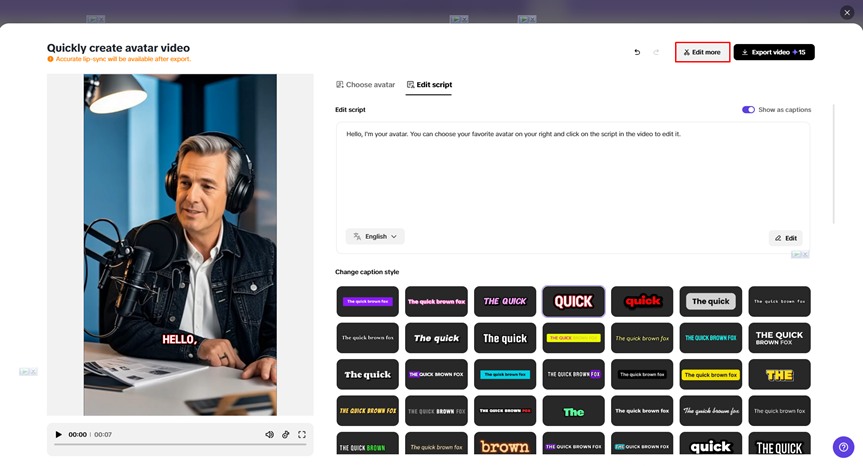
3. Select an avatar and click “Edit script” to personalize the spoken dialogue.
4. Add text in multiple languages and let the AI character engine synchronize speech with natural lip movement.
5. Scroll to “Change caption style” and choose a subtitle format that suits the video’s appearance.
Step 3: Refine synchronization and export the video
- After applying lip sync, click “Edit more” to further improve the avatar’s performance.
- Use the editor to carefully adjust script timing, voice pacing, and facial expressions.
- Add text overlays and background music to strengthen the overall presentation.
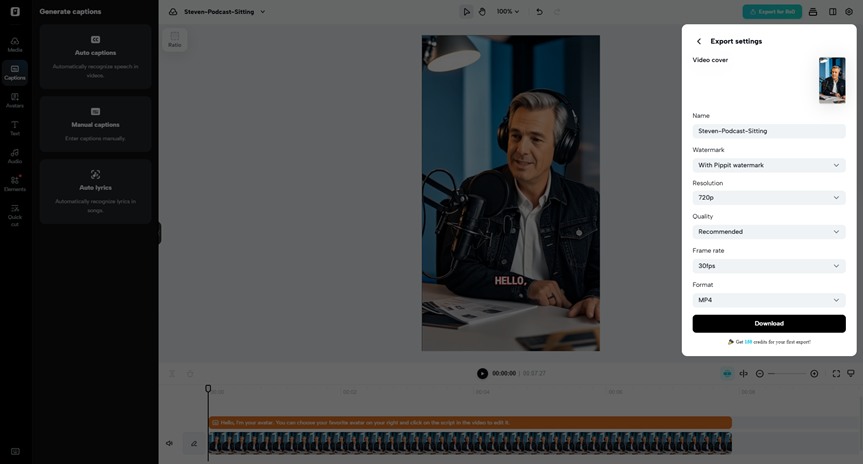
- Once satisfied with the result, click the “Export” tab in the top right corner.
- Choose “Publish” to share on TikTok, Instagram, or Facebook, or select “Download” to save the video using your preferred format, frame rate, resolution, quality, and file name.
Core Elements That Improve Lip-Sync Accuracy
When a person speaks clearly and has good voice quality, the system can accurately interpret the audio. Script structure and pacing enhance the timing of speech-avatar motion. The choice of avatar positively impacts speaking style and the quality of visual alignment. Language-specific modeling is provided throughout regions to support correct pronunciation. Timing of expressions – expressing emotions naturally in sync with others. Seamless video transitions are achieved thanks to visual consistency.
Advanced Features Supporting Realistic Speech Animation
Pippit’s sophisticated systems use layered processing methods to improve speech animation. Phoneme mapping is the process of converting the sound into precise movements of the mouth. Dialogue Timing is the speed at which speech appears in the dialogue relative to the avatars’ movement. The facial expression is seamlessly woven into the spoken word in the coordination of expressions. Language adaptation is used to adapt languages to multilingual scripts without affecting synchronization accuracy. To achieve a professional-quality production, frame-by-frame adjustments are made to perfect your animation. Steady performance throughout the entire length of video sequences is achieved by Voice consistency. These properties reduce manual editing and enhance production scalability for creators. Integrated processing = fewer choppy speech-to-animation frame transitions. Also, automation is used to maintain a consistent brand across large video libraries.
Optimizing AI Character Videos for Different Content Formats
Depending on the content, lip-sync and visual presentation strategies should be adjusted. Clear pacing and structured narration flow are helpful for product explainers. The promotional videos should be lively,, and the avatars’ movements should be expressive. Social media content is quick and needs to be engaged with. Clearness and speed of speech are appropriate to educational materials. To ensure that corporate communication is in a professional tone and to maintain a consistent visual alignment with Pippit tools. On digital platforms, brands use these formats to retain their audience and keep them engaged with their content. Both are controlled-paced, with precise on-screen timing of the avatars. Tight timing and expression, particularly for short form. Stable sync and consistent rendering quality are key to professional output.
Future Developments in AI-Powered Lip Synchronization
Real-time speech animation will be enhanced in Pippit’s future systems. Emotional recognition will be used to enhance the expressive responses of dialogue-driven avatars. More languages will be available for translation to communicate with the rest of the world. Dynamic motion adjustment will be added to give realism through adaptive engines. As AI models continue to evolve, the accuracy of lip-syncing will further improve. Future improvements can consist of adaptive emotional intelligence for avatars. These enhancements will contribute to the naturalness and humanness of communication.
Conclusion
With AI-powered lip sync, video content creation involving avatars takes a new turn. Pippit efficiently makes it easy to align speech with character movement. Automation, accuracy, and creativity flexibility merge for better content. Creators consistently produce professional results on several platforms and formats. The better the synchronization, the better the audience engagement and the better the brand’s communication across various channels. Long-term content performance and credibility are achieved through consistent alignment between visual speech and content.